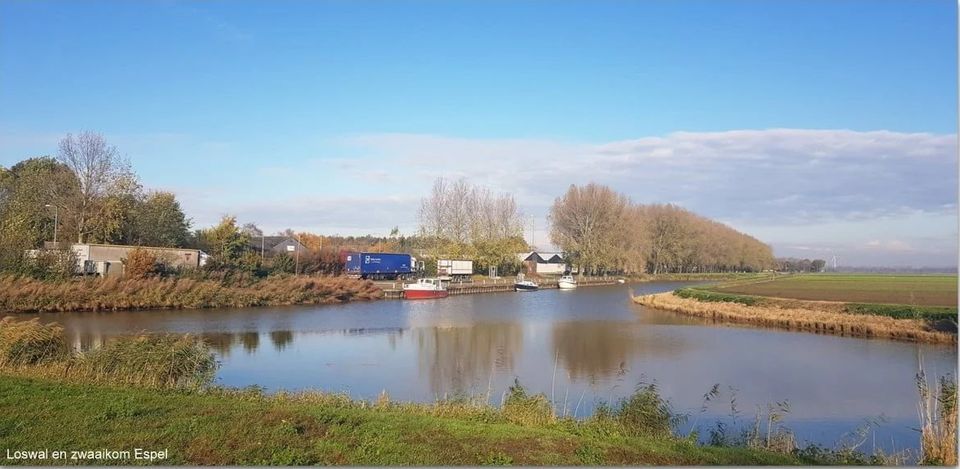
Ships that discharged agricultural products in Espel in the past needed space to turn around. This was impossible in the narrow canals of the Noordoostpolder . Therefore, local widenings in the waterways (so-called swinging bowls) were constructed in places close to an unloading quay. The swing basins have long since lost their function for cargo ships; all beet and the like are now transported by truck.
Sometimes the swinging bowls are still recognisably present in the landscape; in the Noordoostpolder der, only a few swinging bowls remain in their original state. Besides cultural-historical value, the swinging coves have great ecological importance. The inlets form a break in the shoring of the banks. This makes them pearls of natural vegetation in the rigid canals and ditches. They provide shelter for reed and bank-dwelling birds such as the reed warbler, reed bunting and, in some cases, the bluethroat.
