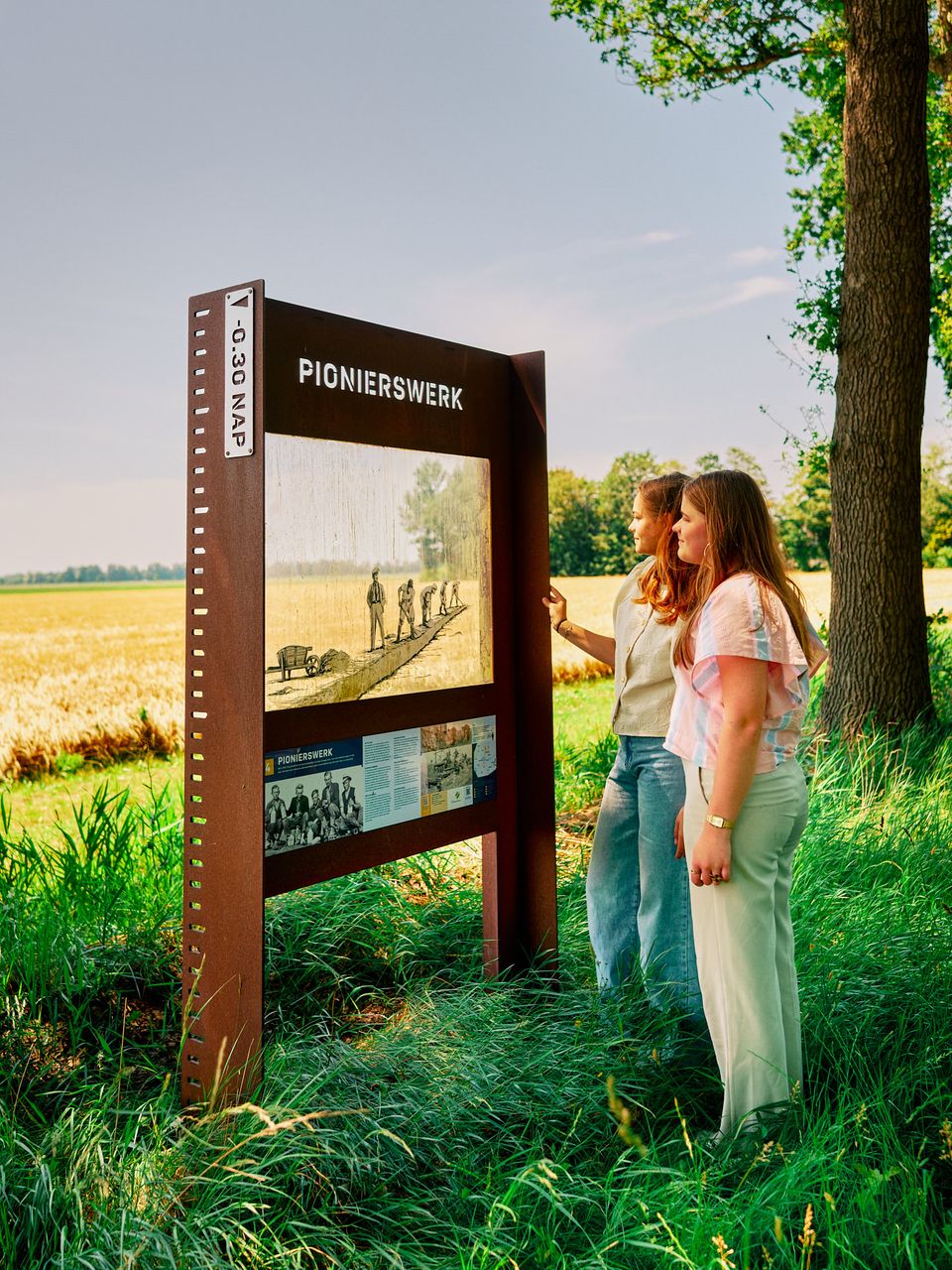


See-through panels are corten steel frames with a transparent plate. On that plate, a drawing visualises an object/activity that is not (or no longer) visible in the landscape. Through the correct perspective of the drawing and the correct positioning of the frame, the drawing is as it were projected into the current landscape. In this way, a special event or a former structure that stood at a specific location can come back to life for a while. Via the look-through panels, we make the special history and unique story of Noordoostpolder more visible.
The Pioneers View Panel is located at the height of...
See-through panels are corten steel frames with a transparent plate. On that plate, a drawing visualises an object/activity that is not (or no longer) visible in the landscape. Through the correct perspective of the drawing and the correct positioning of the frame, the drawing is as it were projected into the current landscape. In this way, a special event or a former structure that stood at a specific location can come back to life for a while. Via the look-through panels, we make the special history and unique story of Noordoostpolder more visible.
The Pionierswerk vista panel stands off Wellerzandweg in Bant and tells the story of the reclamation of the Noordoostpolder. If you look through the panel, you will see some polder workers digging a ditch in the polder with a shovel. The foreman stands watching with his hands in his pockets.
On 9 September 1942, the Noordoostpolder der officially fell dry after about a year and a half of milling. As much as 48,000 hectares of fallow land had to be reclaimed. Due to the war conditions, there was not enough fuel for tractors and therefore the earthwork had to be done by hand.
For this, thousands of workers from all parts of the Netherlands came to the polder. During information evenings, the workers were told that the chances of owning their own business were high if they worked in the Noordoostpolder. Moreover, a worker who had a work permit for the Noordoostpolder did not have to go to Germany for forced labour during World War II.
From the labour camps in which they were housed, the men went out into the vast landscape every day to dig ditches and trenches. Six days a week, they worked 9 hours a day in all weathers on the open plains. Except on Saturdays: then they worked for 5 hours. Under difficult conditions, the polder workers dug ditches and trenches with shovels in the heavy polder clay. Very hard work.
See the exact location of this vista panel on Google Maps.
