When you hear the word ‘monument’, you tend to think of something that is centuries old. But in fact, it refers to any object – such as a building or an archaeological site – that is protected because it is of general interest due to its cultural and historical value.
In the Noordoostpolder, which has been dry since the 1940s and has been a municipality since the 1960s, you can find a wide variety of monuments: buildings that already existed before the rest of the polder was reclaimed and buildings that were constructed after the reclamation. This route takes you past a few of these (national) monuments.
You start at the Poldertoren in Emmeloord, which…
When you hear the word ‘monument’, you tend to think of something that is centuries old. But in fact, it refers to any object – such as a building or an archaeological site – that is protected because it is of general interest due to its cultural and historical value.
In the Noordoostpolder, which has been dry since the 1940s and has been a municipality since the 1960s, you can find a wide variety of monuments: buildings that already existed before the rest of the polder was reclaimed and buildings that were constructed after the reclamation. This route takes you past a few of these (national) monuments.
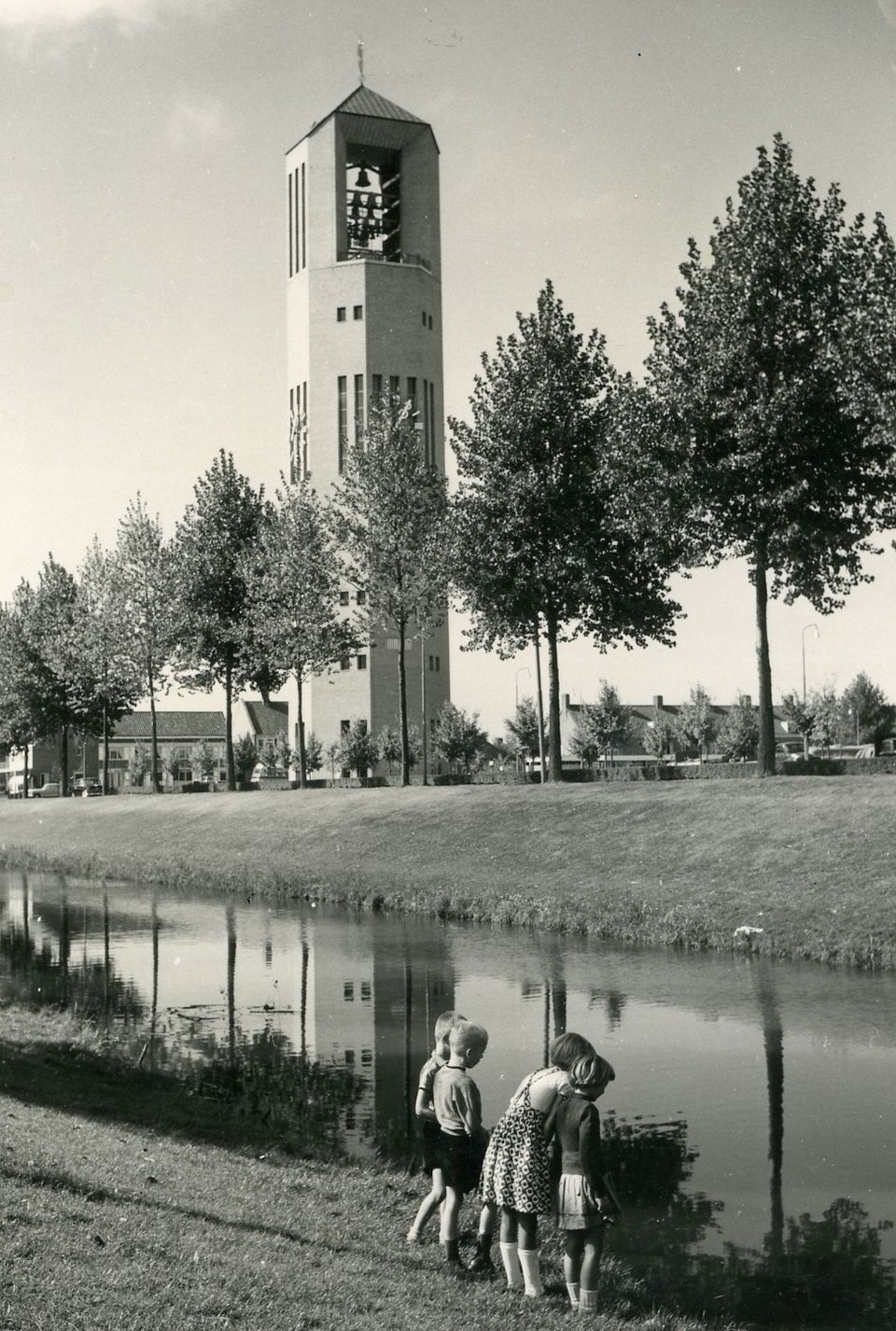
You start at the Poldertoren in Emmeloord, which served as a water tower in the early years of the new polder. The Poldertoren was also intended to serve as a landmark for the ‘ Noordoostpolder ’. This is still the case today, as you can see it rising above the landscape from a great distance. It is no longer a water tower, however, but it is a listed building.
Next to the Poldertoren, near Emmeloord bus station, there is a bike-share hub where you can start your cycle ride if you don’t have your own bike with you. Would you like to know how to reserve, unlock and pay for a bike-share bike? Then take a look at the instructions on this page.
From the centre of Emmeloord, you can cycle to the village of Nagele, a few kilometres to the south. In Nagele, several school buildings have been designated as national monuments. You’ll find no fewer than three of these monuments on the Ring: numbers 1, 11 and 17. All three are schools designed by Aldo van Eyck. Also on the Ring, though in this case a former church, stands the listed building that now houses Museum Nagele. The rest of this ‘flat-roofed village’ is certainly well worth a visit too.
After Nagele, you cycle on to Schokland, the former island in the Zuiderzee that now rises above the surrounding land like a large mound. Here you will find the remains and replicas of buildings that stood on the island even before the reclamation of the ‘ Noordoostpolder ’, such as the Enserkerk, the Misthoornhuisje and the Lichtwachterswoning on the northern tip of the former island. At the southern tip, the restored church foundations on a mound and the preserved foundations of two other former churches have also been designated as national monuments.
PLEASE NOTE: The Keileemweg on the Schokland World Heritage Site has been closed to cars and cyclists for an indefinite period since 13 April 2026 due to severe subsidence and an unsafe road surface. You should therefore follow the Oud Emmeloorderweg a little further than indicated in the GPX file, until you can cycle south via the Plankenpad. At the Schokkerringweg, turn right, then turn left onto the Rivierduinpad. From here, follow the original route.
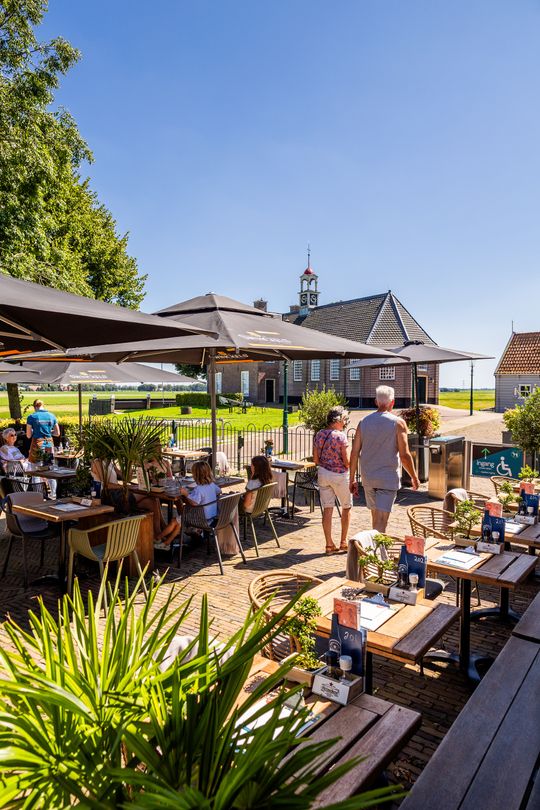
From the northern tip of Schokland, you cycle through the expansive polder landscape back to the Poldertoren in Emmeloord, where you can return any shared bikes you may have hired to the bike hub. Fancy a bite to eat or a drink after your cycle ride? Then you’ve come to the right place, as you’re now at De Deel, also known as Horecaplein De Deel. Pop into Brasserie AanDeel, restaurant 't Voorhuys or Eindeloos for a tasty end to your memorable day out on the ‘ Noordoostpolder ’.